
EMDR for Veterans: How Trauma-Informed Therapy Supports DVA Card Holders
A veteran's guide to EMDR- what it involves and how to access this trauma-informed therapy.
Psychologist Hannah
8/30/20265 min read

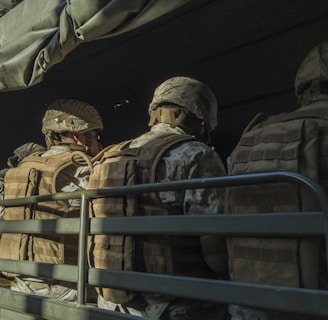
EMDR for Veterans: How Trauma-Informed Therapy Supports DVA Card Holders
Service leaves a mark. For many veterans, that mark shows up as memories that will not settle, a nervous system that stays braced for something that already happened, or a sense of being fundamentally different from who you were before. If you are a DVA Gold Card or White Card holder on the Gold Coast searching for "EMDR for veterans" or "trauma therapy for veterans near me," this guide explains what EMDR is, what the research says specifically for veterans, and what support is available to you.
Mindaras Psychology Clinic is based in Helensvale and supports individuals and families across the Northern Gold Coast, including Coomera, Oxenford, Pacific Pines, Hope Island, Upper Coomera, Ormeau and Nerang. Our team has extensive experience with trauma-informed care, including working with children who have experienced trauma, and we understand how deeply the effects of service can ripple through an entire family.
What EMDR Is, Briefly
EMDR, Eye Movement Desensitization and Reprocessing, is a structured psychotherapy developed specifically to help the brain process traumatic memories that have become "stuck." Rather than requiring you to talk through every detail of an experience at length, EMDR uses bilateral stimulation, most commonly guided eye movements, while you briefly focus on a difficult memory, helping the brain complete the processing that trauma can interrupt. The memory does not disappear. It simply stops triggering the same intensity of physical and emotional reaction each time it surfaces (Military.com, 2025).
EMDR has been formally endorsed as an effective first-line trauma treatment by several major international bodies, including the World Health Organization, the American Psychiatric Association, and both the US Department of Veterans Affairs and Department of Defense (as cited in Hurley, 2018).
What the Research Says About EMDR Specifically for Veterans
It is worth engaging with this honestly, including where the evidence has been debated. Early combat-veteran-specific research produced strong results. A 1998 randomised controlled trial treating combat veterans with PTSD using EMDR found that after twelve sessions, the large majority of participants no longer met the full diagnostic criteria for PTSD, with a notably low dropout rate compared to other trauma treatments (Carlson et al., 1998, as cited in Military.com, 2025). A 2018 study comparing intensive daily EMDR treatment against weekly sessions in veterans with PTSD, including those experiencing dissociation and moral injury, found both formats produced statistically significant improvements that were maintained at one-year follow-up (Hurley, 2018).
At the same time, a 2010 systematic review of veteran-specific EMDR outcome studies concluded that, at that point, the veteran-focused evidence base remained comparatively limited and mixed, and cautioned against treating EMDR as unequivocally proven specifically for combat-related PTSD, even while acknowledging its broader support in civilian PTSD populations (Albright & Thyer, 2010). This is a fair and important caveat. The evidence for EMDR in trauma generally is substantial, and continues to grow for veteran and military populations specifically, but like any treatment, it will not work identically for everyone, and a good therapist should be honest about that rather than overselling a guarantee.
Why EMDR Can Be a Good Fit for Veterans
A few things about how EMDR works make it particularly suited to the kind of trauma many veterans carry.
You do not have to narrate every detail. Traditional talk therapy can require verbalising a traumatic memory in full detail, which some veterans find retraumatising or simply will not do. EMDR does not require this. You hold the memory in mind briefly rather than describing it at length (Military.com, 2025).
It has a track record with complex presentations. Veteran trauma is often not a single incident but a layered combination of experiences, sometimes including moral injury, the distress that comes from having done, witnessed, or failed to prevent something that conflicts with your own values. EMDR protocols have specifically been used and studied with veterans presenting with dissociation and moral injury alongside PTSD (Hurley, 2018).
It is structured, not open-ended. Many veterans appreciate having a clear process with defined phases, rather than an unstructured conversation with no sense of where it is heading.
What This Means for Your Family, Too
Trauma rarely stays contained to one person. Veterans who have processed difficult experiences often describe feeling more present and available as partners and parents afterward, simply because there is more capacity left over once the nervous system is not constantly on alert. If you are a veteran parent, our related guide on DVA-funded psychology services goes further into how service-related experiences can show up in parenting, and what family-focused support looks like alongside your own treatment.
Accessing DVA-Funded Support
If you hold a DVA Gold Card, you can access psychology services for any condition, without needing to prove it is service-related, generally with a GP referral. If you hold a White Card, mental health treatment is available under Non-Liability Health Care arrangements, even for conditions not yet formally accepted as service-related. Open Arms, DVA's dedicated veterans and families counselling service, also offers free, no-referral counselling to veterans and eligible family members on 1800 011 046, available 24 hours a day.
Mindaras is a registered DVA provider, so you can access EMDR therapy with our team directly using your Gold Card or White Card, generally with a GP referral, and at no out-of-pocket cost.
What This Looks Like at Mindaras
Our approach to trauma therapy is paced around you, not a fixed script. Before any reprocessing work begins, we spend real time on preparation, making sure you feel resourced, safe and clear on the process, because rushing this stage does a disservice to the work that follows. We are always happy to answer questions honestly, including where the evidence is stronger and where it is more mixed, before you commit to anything.
Alongside EMDR, Mindaras offers a broader range of psychological services for individuals and families across the Northern Gold Coast, including anxiety and mood support, ADHD and ASD assessments, and support for children who have experienced trauma of their own.
Get in Touch
If you are a veteran on the Gold Coast carrying something that still feels too close, even though it happened a while ago, it is worth having a conversation about whether EMDR could help. Get in touch with Mindaras Psychology Clinic through our Contact page to ask questions, discuss your GP referral, or book an appointment using your DVA card. While you are there, take a look through the full range of services we offer the Northern Gold Coast community. Processing what happened is not about forgetting your service. It is about no longer having to relive it.
References
Albright, D. L., & Thyer, B. (2010). Does EMDR reduce post-traumatic stress disorder symptomatology in combat veterans? Behavioral Interventions, 25(1), 1-19. https://doi.org/10.1002/bin.295
Hurley, E. C. (2018). Effective treatment of veterans with PTSD: Comparison between intensive daily and weekly EMDR approaches. Frontiers in Psychology, 9, Article 1458. https://doi.org/10.3389/fpsyg.2018.01458
Military.com. (2025). EMDR: The PTSD treatment many veterans don't know the VA offers. https://www.military.com/benefits/veterans-health-care/emdr-ptsd-treatment-many-veterans-dont-know-va-offers.html
This article is for general information only and does not replace individual clinical or financial advice. DVA eligibility, coverage and provider registration are subject to change. Please confirm current entitlements with the Department of Veterans' Affairs, your GP, or by calling Open Arms on 1800 011 046 (24/7).
If you or someone you know is in crisis, call Open Arms on 1800 011 046 or 000 in an emergency.